
Loading Your Adventure
Preparing your Amazon fishing experience...
Loading Your Adventure
Preparing your Amazon fishing experience...

Santa Isabel do Rio Negro
--°F
Current conditions
Amazon Fish Encyclopedia
Pacu
Amazon
Pacu Information
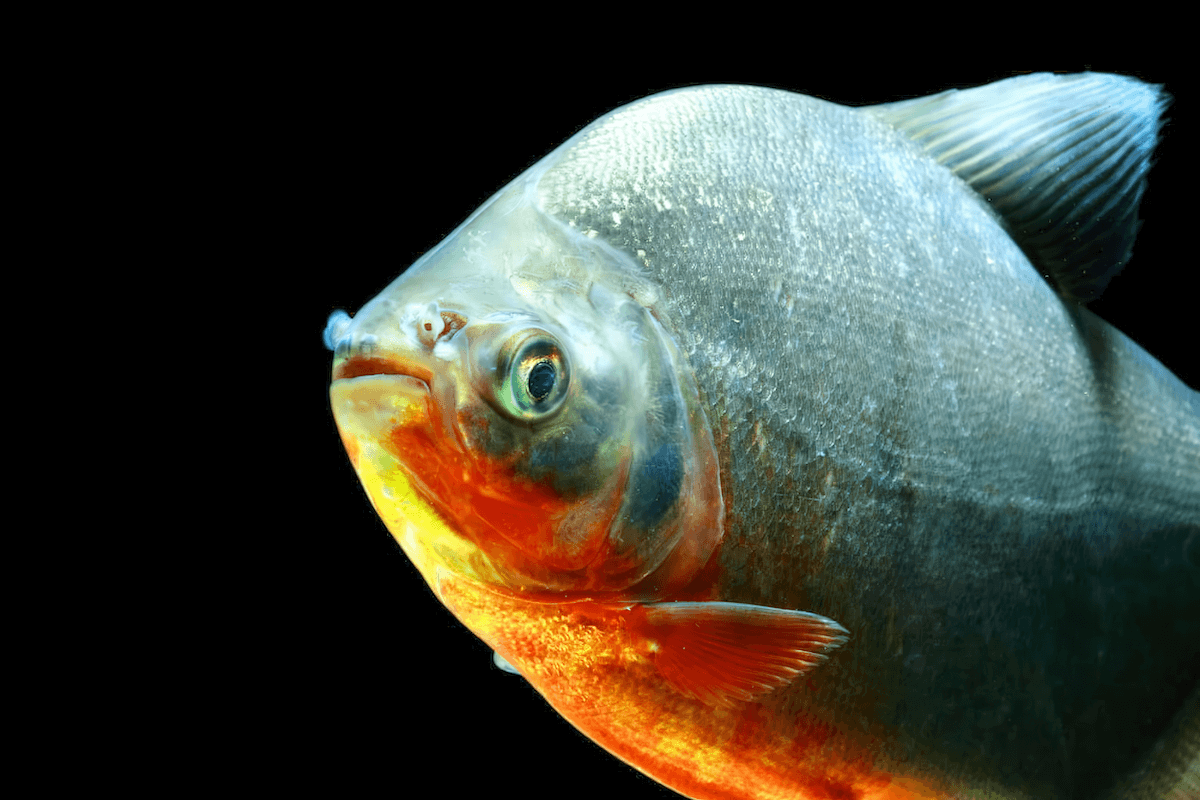
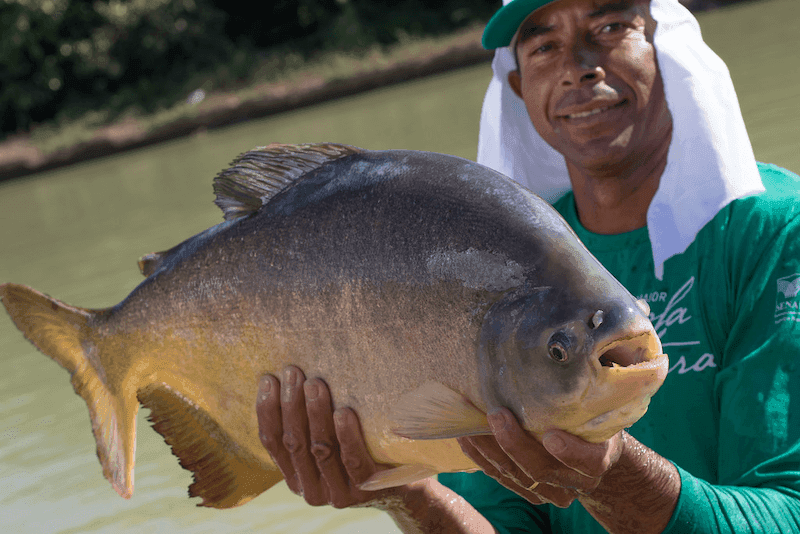
The Pacu (Pah-Cuh) is a remarkable species often called the "vegetarian piranha" due to its appearance but vastly different diet. Despite their intimidating teeth, these powerful fish primarily feed on fruits and nuts that fall into the water. Their unique ability to crush hard seeds and nuts makes them important seed dispersers in the Amazon ecosystem.
The estimated potential yield for Pacu is approximately 7,300 tons, with the Central Amazon being the primary fishing region, accounting for 75% of the total. The Peruvian Amazon follows as the second most significant region, contributing 13% of the yield.
The Pacu group in commercial fisheries includes species from the genera Mylossoma, Myleus, and Metynnis, with Mylossoma duriventre and Mylossoma aureus being the most commercially valuable. Pacu are omnivorous but have a strong preference for fruits and seeds. While Mylossoma species are commonly found in whitewater and clearwater rivers, they are generally absent from blackwater environments, where other Pacu genera are more prevalent. Mylossoma species are also migratory, forming large schools as they move through whitewater and clearwater river systems.
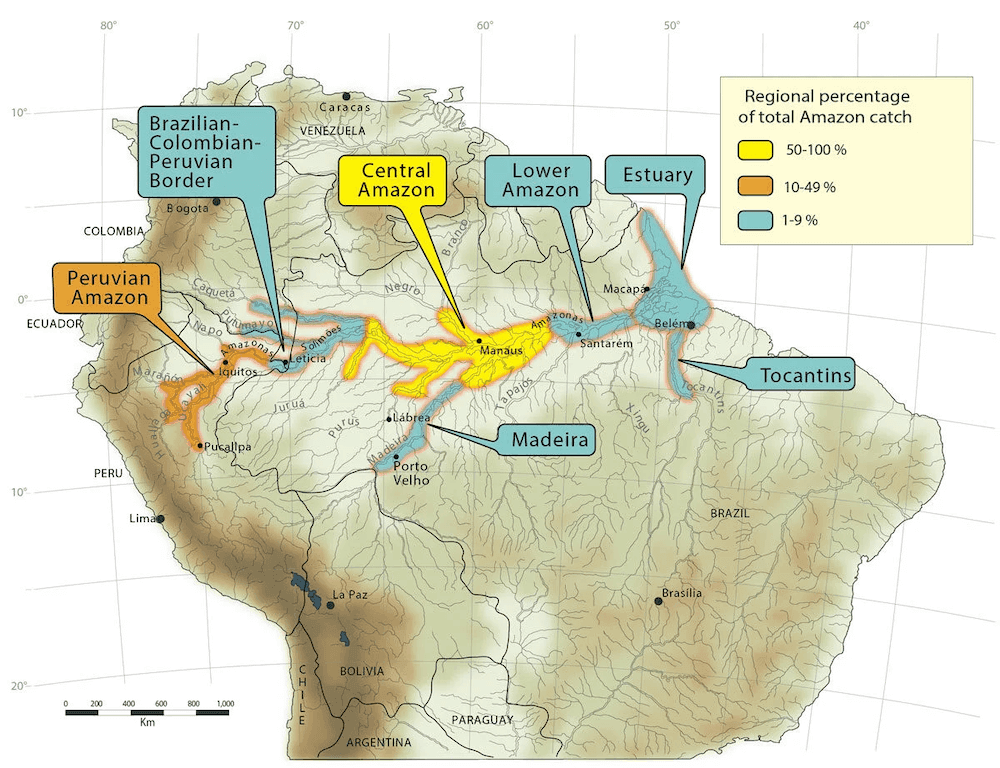
Distribution of Pacu catches. Source: Barthem, R., Goulding, M. 2007. An unexpected ecosystem: the Amazon as revealed by fisheries. Missouri Botanical Garden Press.
Pacu are found across a variety of freshwater environments in South America. They are migratory fish that follow changing water levels, moving into flooded areas during high water seasons and retreating to deeper channels when waters recede. They show a strong preference for areas with overhanging vegetation that provides their primary food source.
Pacu are omnivores with a strong preference for plant matter. Their unique diet and feeding habits make them crucial seed dispersers, helping to reforest the banks of the Amazon through their digestive process.
Through their seed-dispersing behavior, Pacu contribute significantly to the regeneration of Amazon forests, spreading viable seeds along riverbanks.
Ownership Disclaimer: Amazon Xtreme Fishing does not own the rights to this video. All footage and content remain the property of their respective owners. For educational purposes only.
Pacu are smart, fast, and incredibly strong, offering an exciting challenge for anglers. Their hard mouths and powerful jaws require strong tackle and sharp hooks, while their cautious nature demands patience and strategy.
Pacu populations have declined in some regions due to overfishing and habitat destruction. While they are commonly farmed in aquaculture operations, wild populations remain essential for the Amazon's ecosystem health. Their introduction outside their native range has led to invasive population concerns in some areas.
Release large individuals to maintain populations
Avoid harvesting undersized fish
Choose sustainably farmed when possible
Monitor non-native populations
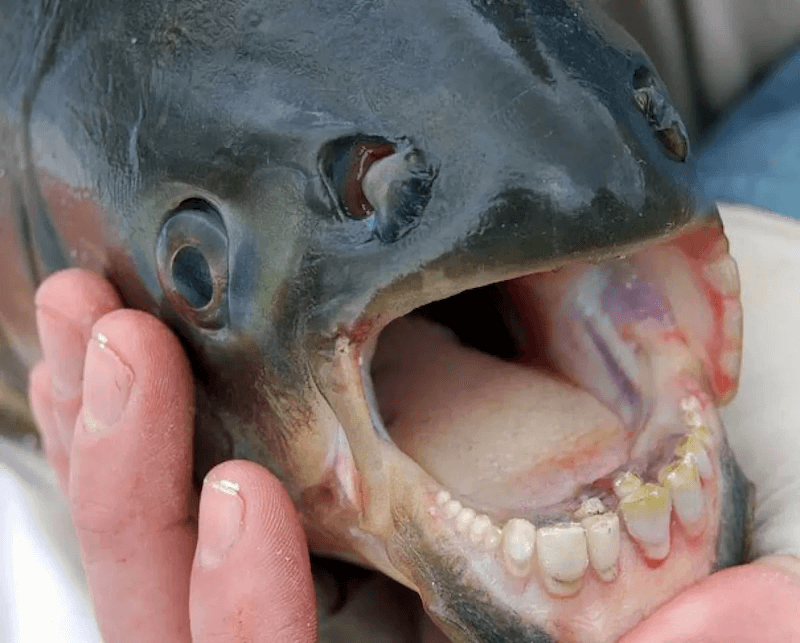
Famous for their human-like teeth, which are specially adapted for crushing tough nuts and seeds.
Often called "vegetarian piranhas" due to their similar body shape but vastly different diet.
Highly valued in South American markets for their tasty meat, commonly prepared grilled or fried.
Can survive in low-oxygen environments and are closely related to Tambaqui, though usually smaller in size.
DON'T LET THIS ONE GET AWAY!
The Season is filling up quick! Reach out to our committed travel team for information on pricing, packages and more.