Loading Your Adventure
Preparing your Amazon fishing experience...
Loading Your Adventure
Preparing your Amazon fishing experience...

Santa Isabel do Rio Negro
--°F
Current conditions
Tips & Tricks
Art of the Catch
Your

Comprehensive Proven Strategies
Mastering peacock bass fishing requires understanding their unique behavior patterns and adapting your techniques to the challenging Amazon environment. These powerful gamefish behave differently from North American bass species, with distinct feeding patterns, habitat preferences, and seasonal movements that demand specialized approaches. Whether you're targeting the iconic Cichla temensis (Speckled or Three-Bar Peacock) that can exceed 25 pounds, or the smaller but equally aggressive Cichla monoculus (Butterfly Peacock), the right tactics can make the difference between a dream trip and disappointment.
Peacock bass are ambush predators that thrive in structure-rich environments, using submerged logs, rock formations, and vegetation edges as staging areas to attack prey. Their aggressive territorial nature and schooling behavior create unique fishing opportunities that require specific techniques. From understanding the impact of seasonal water levels to selecting the perfect lure presentation, this guide provides comprehensive tactics from experienced Amazon guides to help you connect with these magnificent fish. Read on for expert strategies that will maximize your success on the water and prepare you for the explosive strikes and powerful fights that make peacock bass one of the world's premier freshwater gamefish.
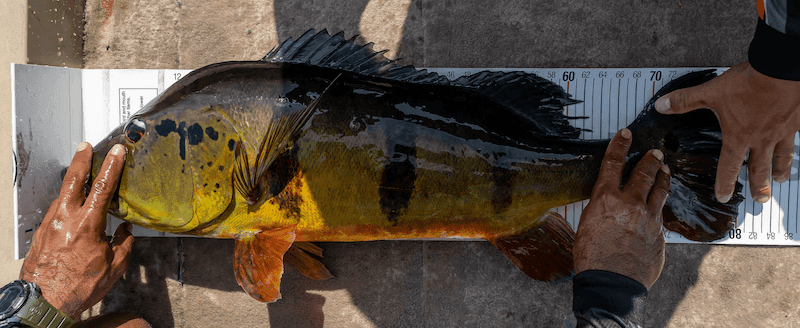
Peacock bass, like largemouth bass, often gravitate towards structures such as rocks, fallen logs, points, and sandbars. These locations provide hiding spots for baitfish, making them prime hunting grounds for peacocks. Rely on your guide's expertise to identify these hotspots and follow their recommendations for where to cast.
The specific habitat preferences of peacock bass vary significantly with water levels and seasons. During high-water periods, focus on "edges"—the transitions between flooded forest and open water where peacocks ambush prey moving between these zones.
Target Submerged Trees
Peacocks use submerged trees and brush that extend into deeper water as hunting platforms.
Look for "Tree Points"
Several submerged trees create natural ambush points extending into channels or lagoons.
During lower water periods, peacocks congregate around main channel structure, rocky outcroppings, and deeper lagoons.
Pay Attention to "Pinch Points"
Areas where water narrows between landmasses create natural funnels that concentrate both baitfish and predators.
Target Time-Specific Areas
Morning and evening hours are particularly productive around shallow flats adjacent to deeper water, where peacocks move up to feed in the cooler periods of the day.
Prime ambush locations, especially during low water. Peacock bass use these structures to corral baitfish against hard surfaces.
Provide shade and cover for predators. These structures create perfect ambush points for peacock bass to attack passing prey.
Creates complex structure during high water periods. These areas concentrate baitfish and provide multiple strike zones for peacock bass.
The presence of baitfish is the most reliable indicator of productive peacock bass territory. Watch for surface activity, particularly the characteristic "busting" or splashing as peacocks herd and attack schools of baitfish.
Pro Tip:
Even when fish aren't actively feeding, submerged structure that holds baitfish is worth investigating thoroughly. Multiple casts to promising structure are often necessary, as peacocks may need several presentations before committing to strike.
When Peacock Bass release their fry from their mouths, the water ripples with thousands of tiny fish moving together. This "bubbling water" effect signals an active feeding zone, drawing in aggressive predators. Locals call this "chuveirinho" or "little shower" and it's crucial to be aware of it when fishing.
Pro Tip:
Cast your lure directly into the center of the disturbance, mimicking a struggling baitfish. Topwater lures, such as poppers or prop baits, work best to provoke explosive surface strikes. Quick, erratic retrieves can trigger aggressive reactions from hunting peacocks.
DON'T LET THIS ONE GET AWAY!
The Season is filling up quick! Reach out to our committed travel team for information on pricing, packages and more.