Loading Your Adventure
Preparing your Amazon fishing experience...
Loading Your Adventure
Preparing your Amazon fishing experience...

Santa Isabel do Rio Negro
--°F
Current conditions
Amazon Fish Encyclopedia
Goliath Catfish
Amazon
Piraíba (Goliath Catfish) Information
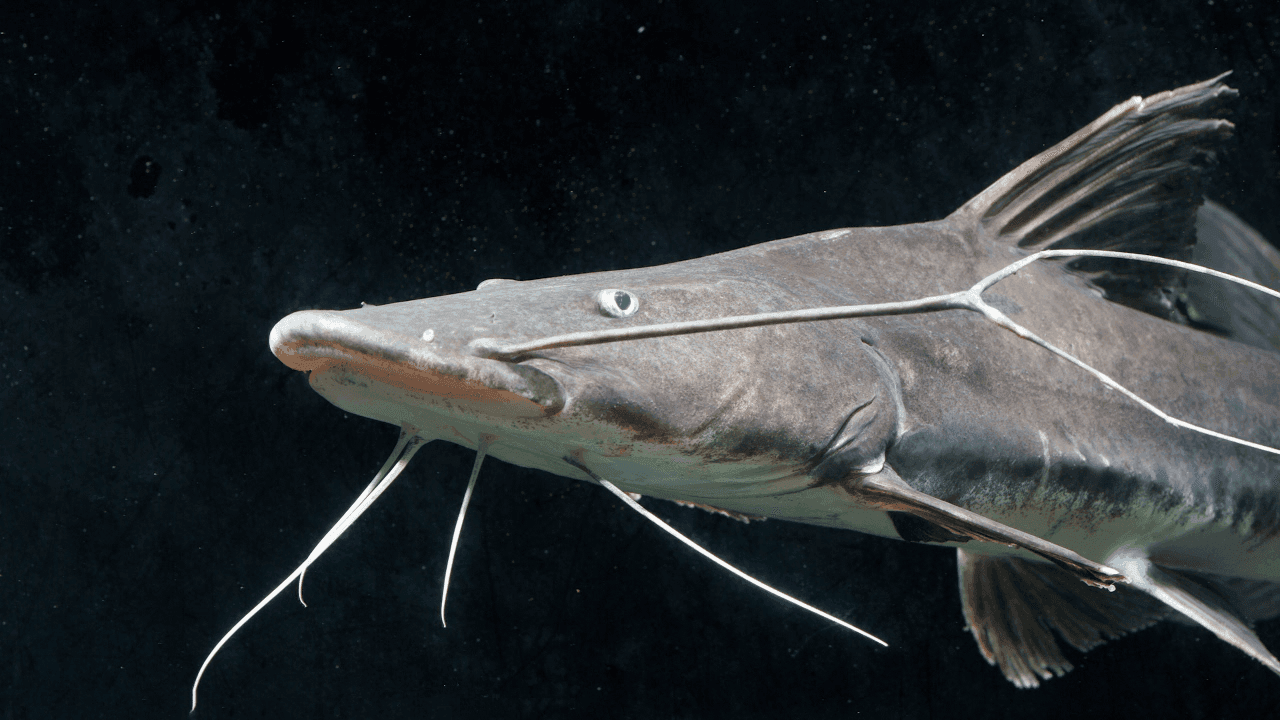
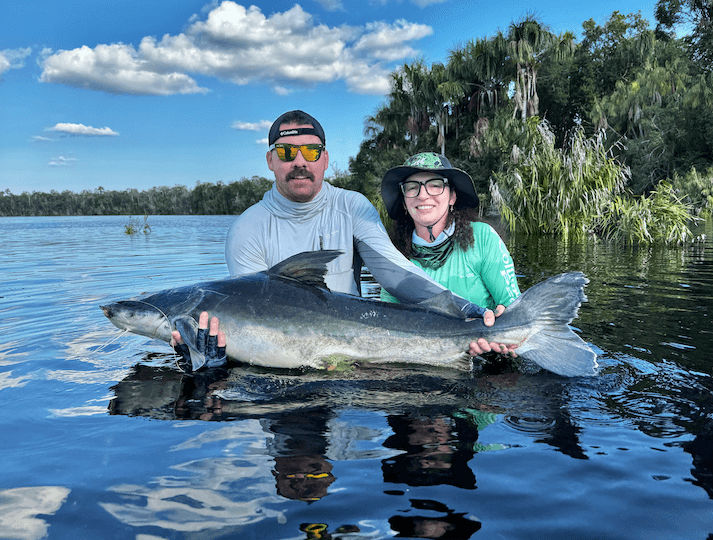
The Piraíba (Pee-Rah-E-Bah), also known as the Goliath Catfish, is one of the largest freshwater fish in the Amazon. Known for its immense size and strength, this predator inhabits deep, fast-moving waters and preys on large fish, including other catfish. Catching a Piraíba is an extreme challenge, making it a prized trophy for dedicated anglers.
Piraíba potential yield was estimated to be approximatley 5,500 tons. The Brazilian-Colombian-Peruvian border regions (71%) accounts for most of the catch, followed by the Central Amazon (8%), Peruvian Amazon (6%), Estuary (6%) and Lower Amazon (5%).
The Piraíba was once thought to be a single species, but researchers have recently identified a second species. It remains uncertain whether both species play a significant role in commercial fisheries. Piraíba typically grow to at least 1.8 meters in length and can weigh up to 100 kg, though commercially caught specimens usually range between 20 and 50 kg. Unlike many other large catfish, the Piraíba does not appear to be migratory, as mature individuals have been found across a broad expanse of the Amazon Basin. However, they are often seen trailing schools of piramutaba and other fish species as they migrate upstream. Piraíba are primarily piscivorous, feeding almost exclusively on fish.
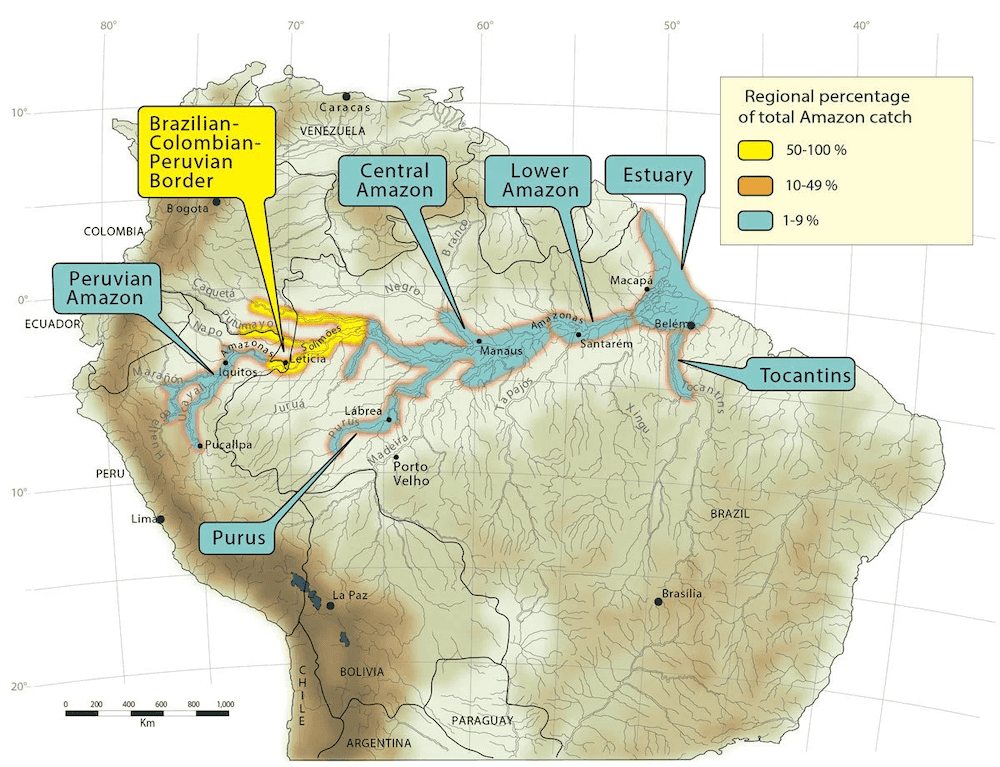
Distribution of Piraíba catch. Source: Barthem, R., Goulding, M. 2007. An unexpected ecosystem: the Amazon as revealed by fisheries. Missouri Botanical Garden Press.
This species thrives in the deep channels of major river systems, particularly in areas with strong currents and deep holes where it ambushes prey. Found throughout the Amazon and Orinoco River basins, it has been known to migrate vast distances—from estuarine waters near the Atlantic coast to the upper tributaries of the Amazon.
During the rainy season, Goliath Catfish move upstream to spawn, and juveniles are often found in nutrient-rich estuaries before they embark on their long migration.
The Goliath Catfish is a relentless predator, feeding almost exclusively on large fish. Unlike many bottom-feeding catfish, this species actively hunts and ambushes prey in fast-moving waters.
Unlike bottom-feeders, Goliath Catfish are active predators that hunt in fast-moving waters, using ambush tactics to catch large prey.
Landing a Goliath Catfish is no easy feat—it requires strength, endurance, and the right gear to withstand its raw power and long runs.
Expect prolonged battles lasting 30-90 minutes or more, requiring patience and skill to land these giants.
While not currently classified as endangered, the Goliath Catfish is vulnerable to overfishing, particularly from commercial fisheries. Due to their slow reproductive rate and long migrations, populations can be impacted by excessive harvesting. Many fishing operations encourage sustainable angling, ensuring the survival of these legendary fish for future generations.
Minimize injury during capture and release
Minimize time out of water during handling
Avoid lifting by gills when handling for photos
Ensure fish is strong enough before releasing
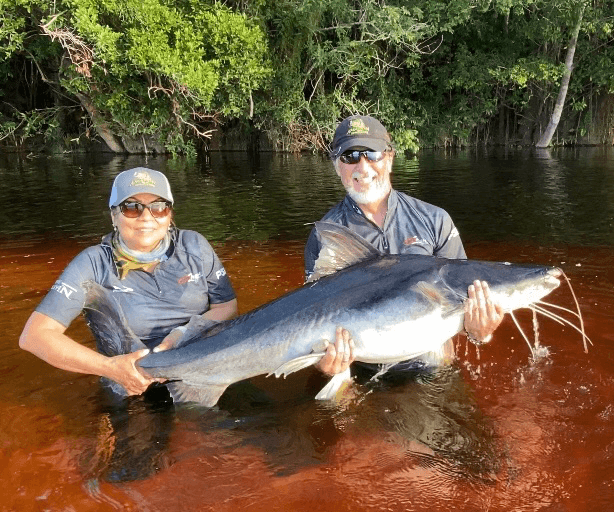
The Goliath Catfish is often referred to as the "King of the Amazon's Deep Waters," commanding respect in local culture.
In Brazilian folklore, the Piraíba is believed to swallow entire humans, though this is an exaggeration of their impressive size.
Juveniles have been found thousands of miles from their spawning grounds, making them one of the most widely migrating catfish species.
Unlike many other catfish, the Goliath actively chases and hunts prey rather than waiting for food to come to it.
DON'T LET THIS ONE GET AWAY!
The Season is filling up quick! Reach out to our committed travel team for information on pricing, packages and more.